ASTROCENT – NEW BEGINNINGS

International Institute for Particle Astrophysics, Polish Academy of Sciences: The first of its kind in Central and Eastern Europe.

NEW SCIENCE AND TECHNOLOGIES

We build the instruments that make discoveries possible – then bring their power back to Earth.

NEW WINDOWS TO THE UNIVERSE

We tune to the Universe beyond light – catching whispers of neutrinos, dark matter, and gravitational waves.

NEW PATHWAYS

From Warsaw to the world’s flagship collaborations, we grow talent, build capability, and help Poland lead in the decades ahead.

From Centre of Excellence to International Institute

International Institute for Particle Astrophysics, Polish Academy of Sciences, (commonly called simply Astrocent) is a new institute dedicated to studying the Universe through its most elusive messengers, like neutrinos, dark matter, and gravitational waves – in other words, the invisible Universe.

Astrocent came to existence in July 2018 within the Nicolaus Copernicus Astronomical Center of the Polish Academy of Sciences as a completely new autonomous centre of excellence with the funding of nearly 38 million PLN from the Foundation for Polish Science’s International Research Agendas Programme (IRAP). Based in Warsaw, it is open to to collaborations worldwide and is built for long-horizon cooperation and real-world impact.

Its current growth and transformation to a new institute is based on three main pillars: the Horizon Europe Teaming for Excellence project Astrocent Plus (since January  2025), which initiated the transformation, augmented by the complementary funding from the IRAP grant (since January 2026) and support from the Ministry of Science and Higher Education. Together, these streams amount to €30 million over six years and provide a stable base to expand our human and research infrastructure capacity, partnerships, and training – aiming at making the invisible side of the Universe to become visible, and turning discovery into a value for society.
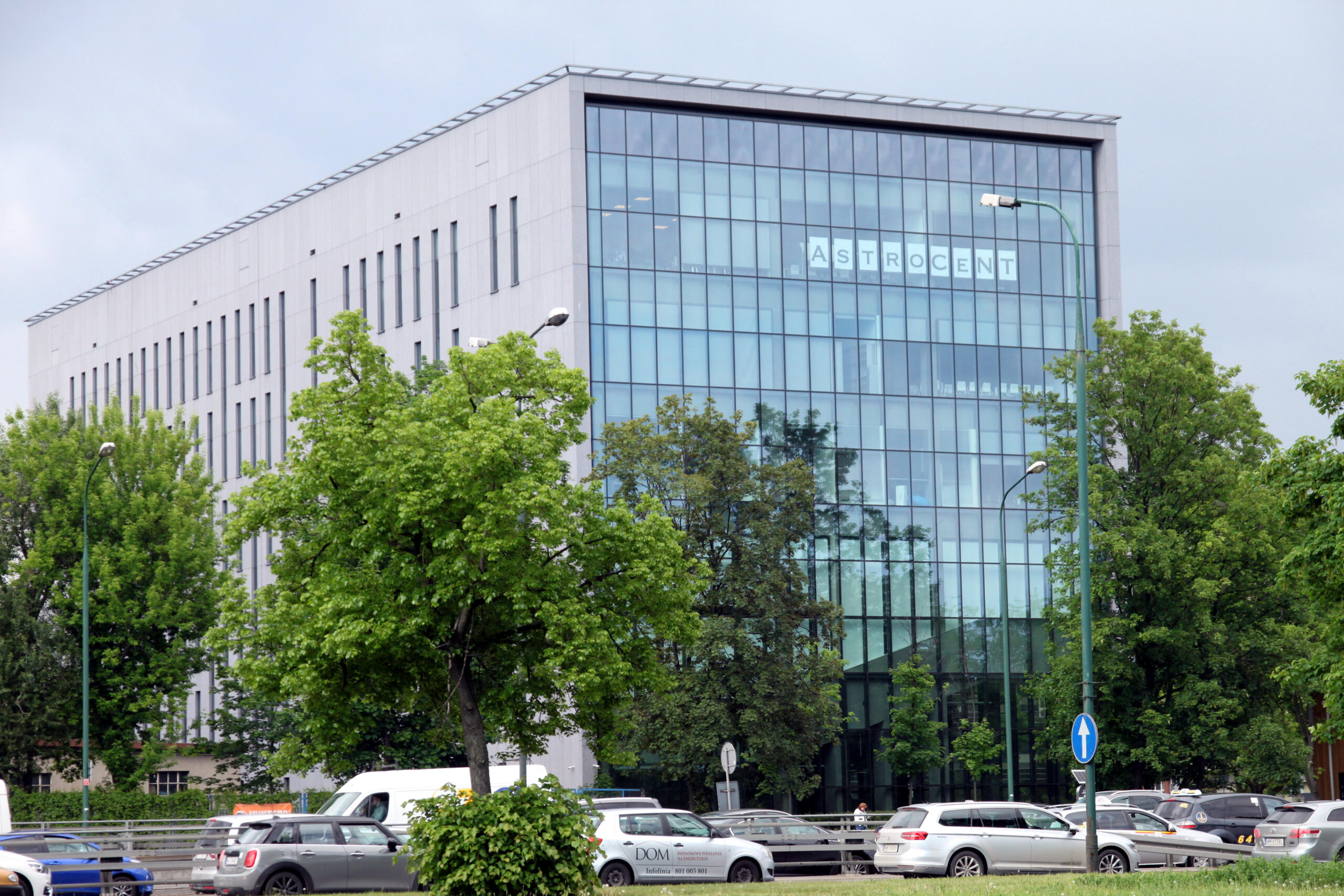
Astrocent Rektorska location
The building on Rektorska Street in Warsaw, where Astrocent is currently located

Astrocent was founded with a vision to build a world-class research centre in particle astrophysics in Poland. With EU-funded Astrocent Plus, matched by complementary funding from Poland, we are taking a bold new step toward fulfilling this vision – expanding our capabilities, fostering interdisciplinary collaboration and ensuring a lasting impact on both fundamental science and innovative technologies by setting up a new institute that will eventually become a hub for our field in the region.
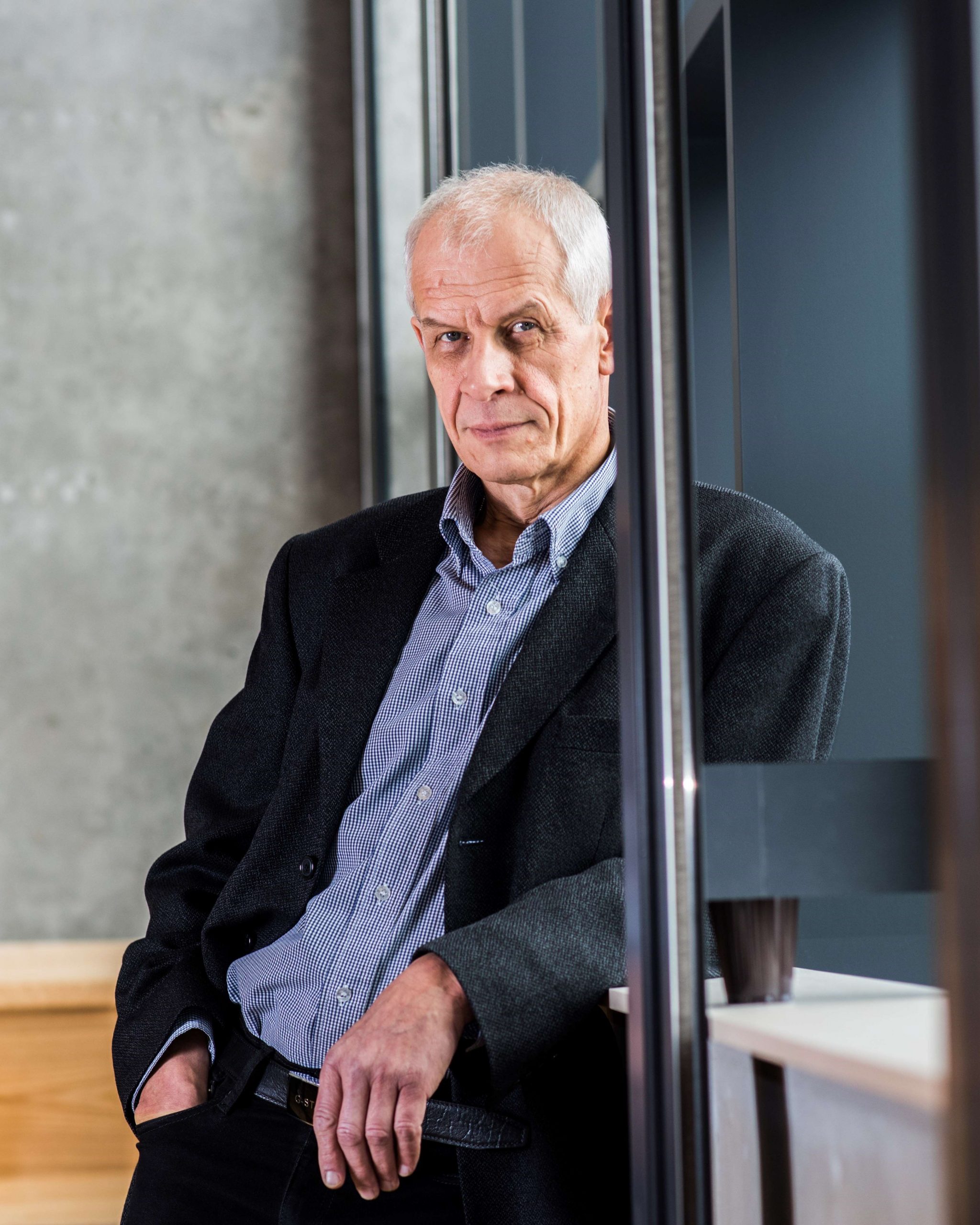
Professor Leszek Roszkowski

Head of Astrocent

A portrait of a man standing indoors near a glass wall, wearing a jacket and shirt, looking directly at the camera in a modern interior space.
Prof. Leszek Roszkowski, Director of Astrocent
SCIENCE

Exploring the hidden Universe

Dark Matter Icon

DARK MATTER SEARCH

Developing ultra-sensitive detectors and analysis methods to identify dark matter in the Universe through extremely rare and extremely faint signals.

Neutrino Icon

NEUTRINO PHYSICS

Studying neutrinos arriving from the Sun and outer space, as well as neutrinos produced in Earth-based experiments, to probe extreme environments and the fundamental laws of nature.

Gravitional Waves Icon

GRAVITATIONAL WAVES

Using gravitational waves to study collisions of black holes and neutron stars and to test gravity in extreme cosmic events.

INNOVATIVE TECHNOLOGIES FROM SCIENCE

Implementing science-borne innovative solutions in high-tech industry, health protection, climate and society.
PARTICLE ASTROPHYSICS AND COSMOLOGY THEORY

Seeking deeper understanding of the Universe, its origin, composition and processes, in terms of fundamental building blocks and interactions.

Partners

We focus on cooperating with leading national and international partners from science and industry to advance particle astrophysics and detector technologies, driving innovation through collaboration.
Gallery

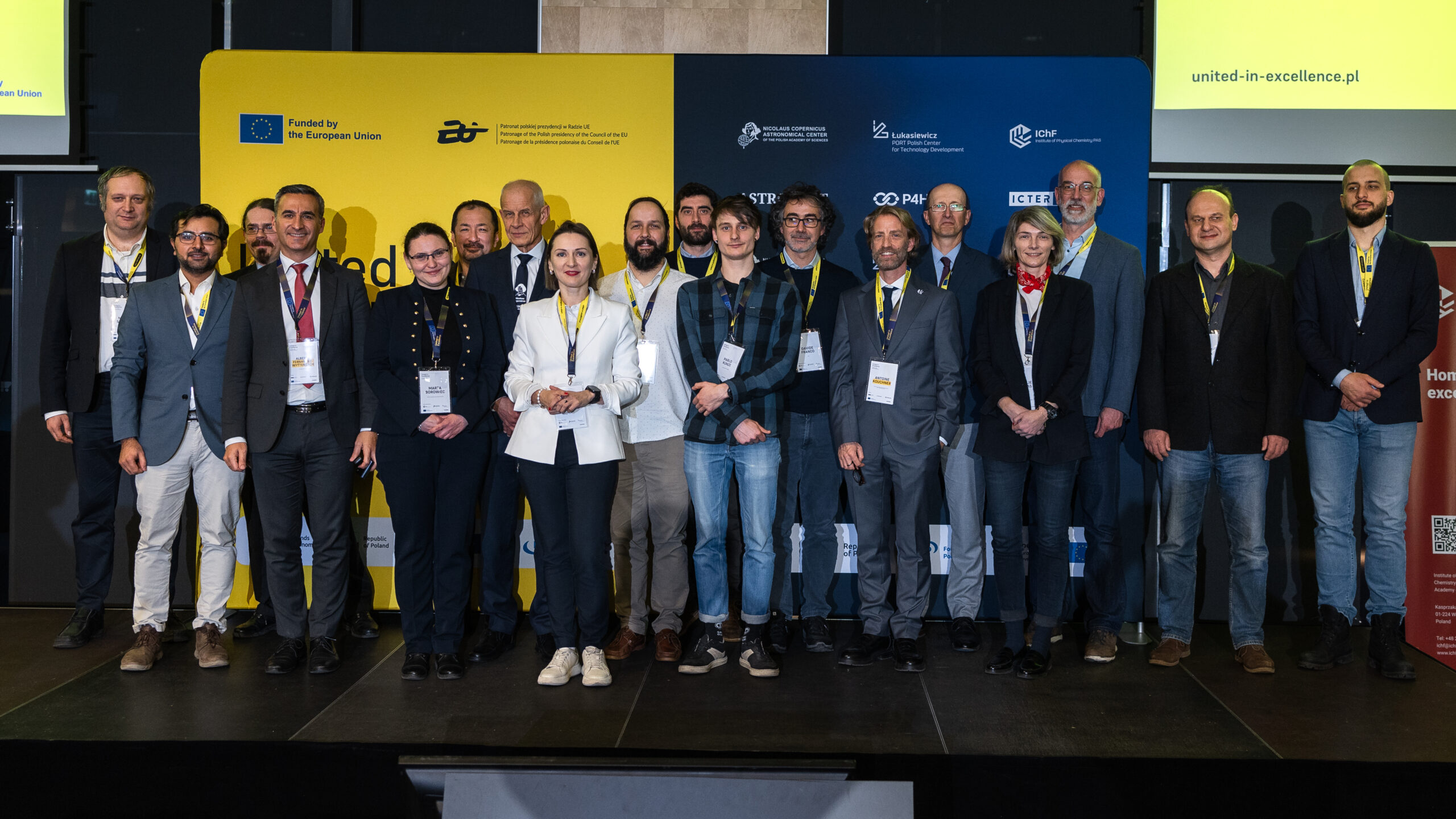
Group of people standing on a stage in front of a “United in Excellence” conference backdrop.

Teaming for Excellence project kick off event

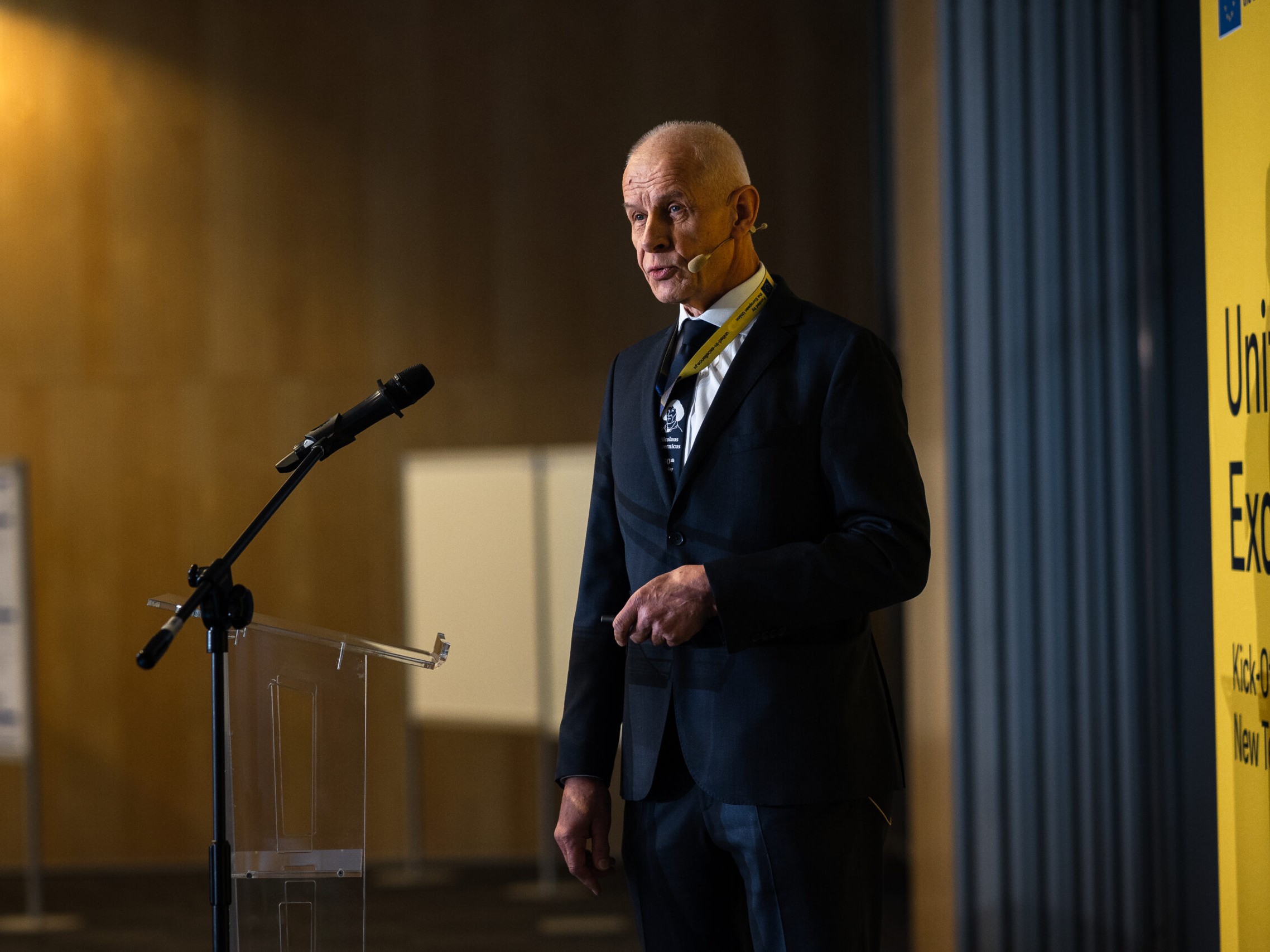
A man in a dark suit speaks at a conference podium, wearing a headset microphone, with a yellow event banner partially visible to the right.

Prof. Leszek Roszkowski, Director of Astrocent, giving a talk during the Teaming for Excellence kick-off

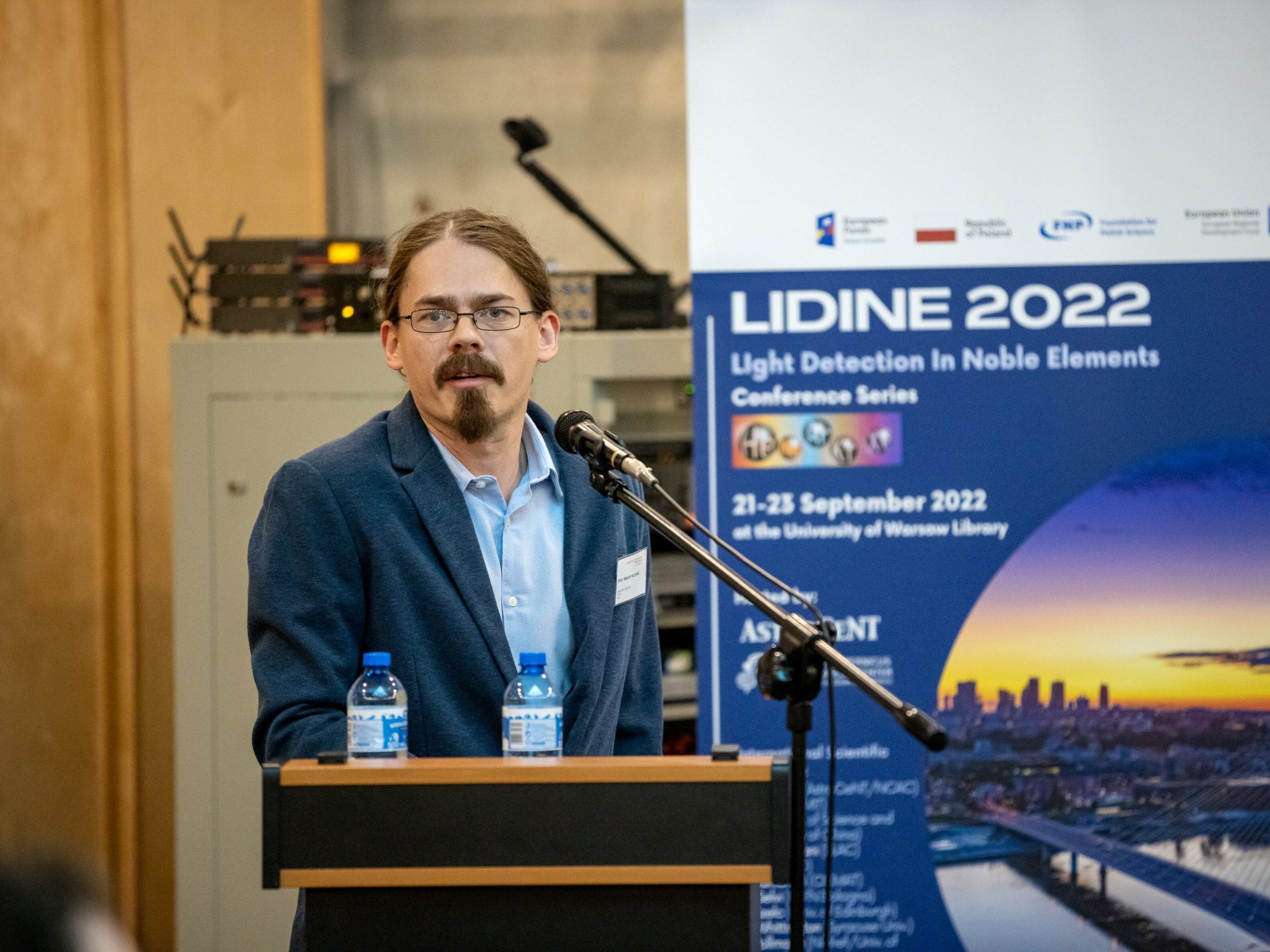
Scientist speaking at a podium during an international physics conference, with a microphone, water bottles, and a “LIDINE 2022 – Light Detection in Noble Elements” conference banner in the background.

Prof. Marcin Kuźniak, organiser of the LIDINE 2022 conference

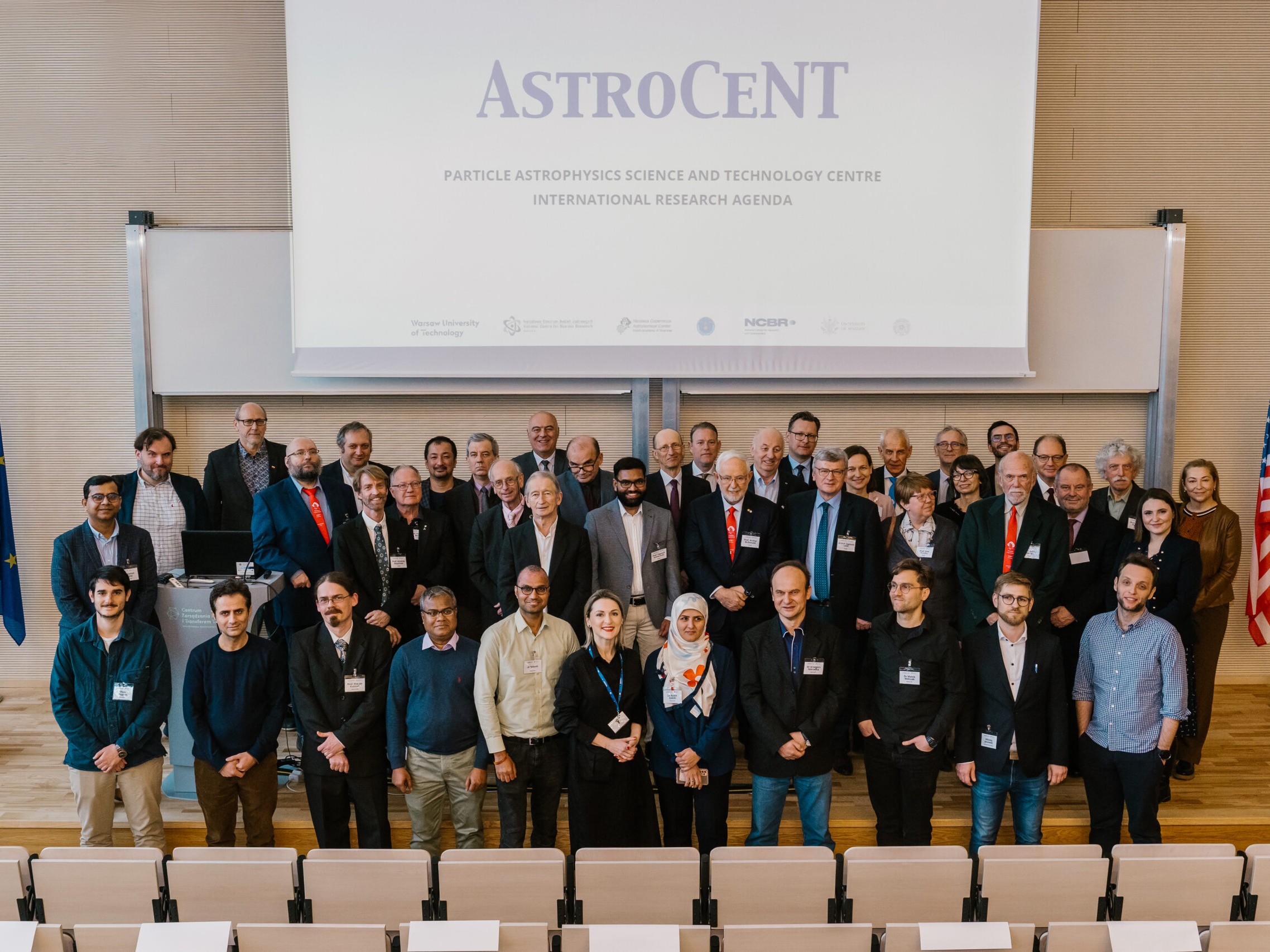
Large group posing for a group photo in a lecture hall

Attendees and organisers of the Nobel Prize Laureates A. McDonald and B. Barish public talks at Astrocent

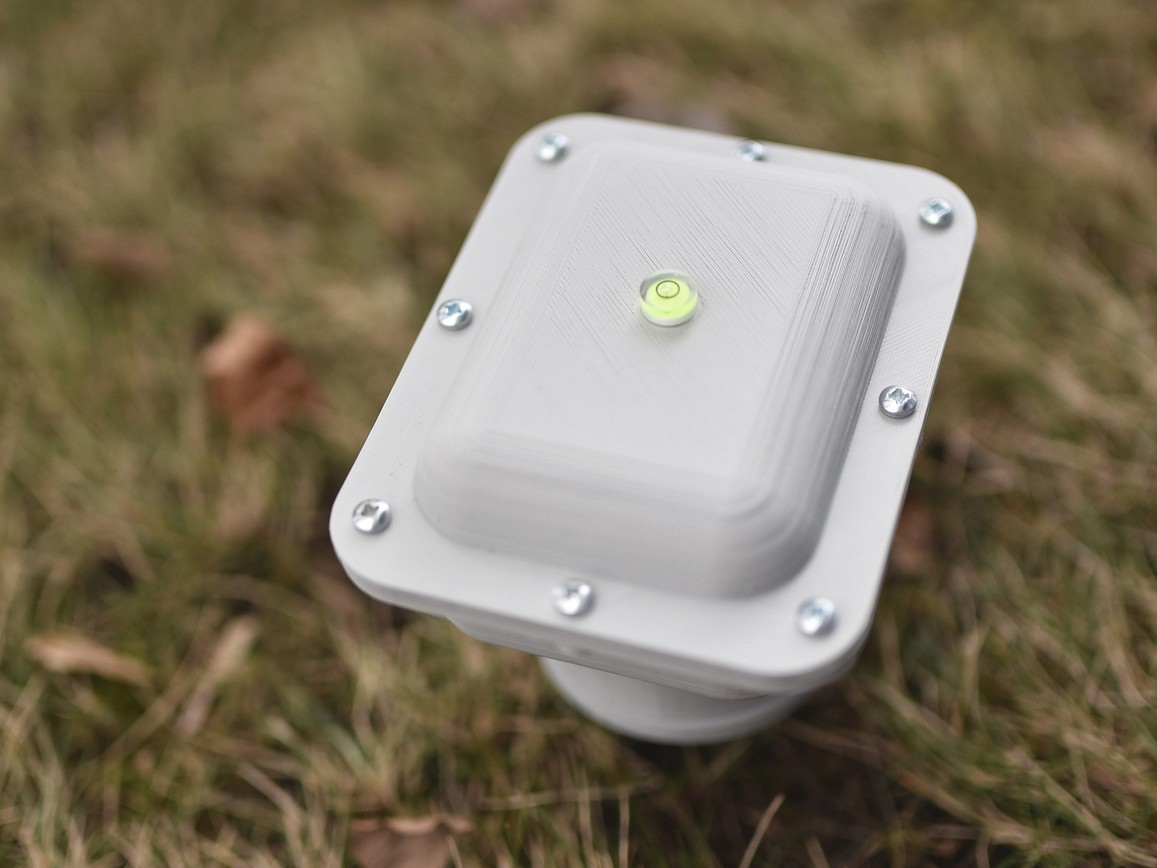
Small square seismic sensor mounted outdoors in grass, with a built-in spirit level visible on top.

Seismic sensor produced at Astrocent

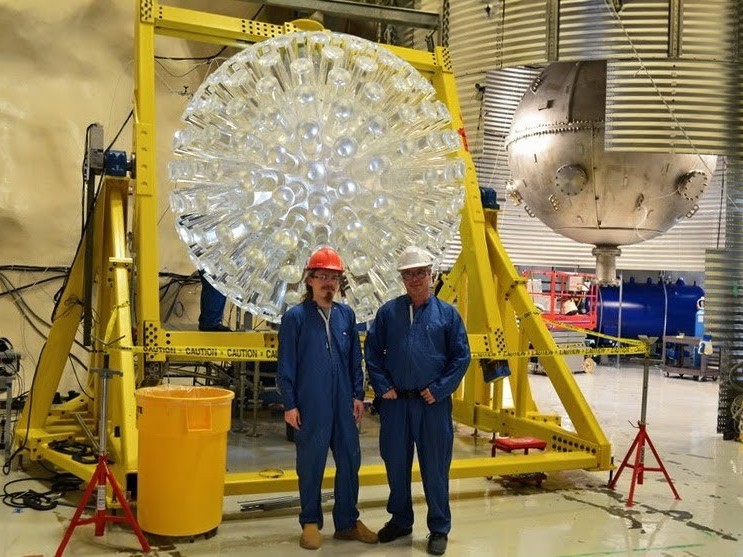
Two researchers in blue coveralls and hard hats stand in an industrial lab in front of a large circular array of clear detector modules mounted on a yellow support frame; a large metallic sphere and corrugated ducting are visible behind them.

Inside the DEAP-3600 detector facility, SNOLAB

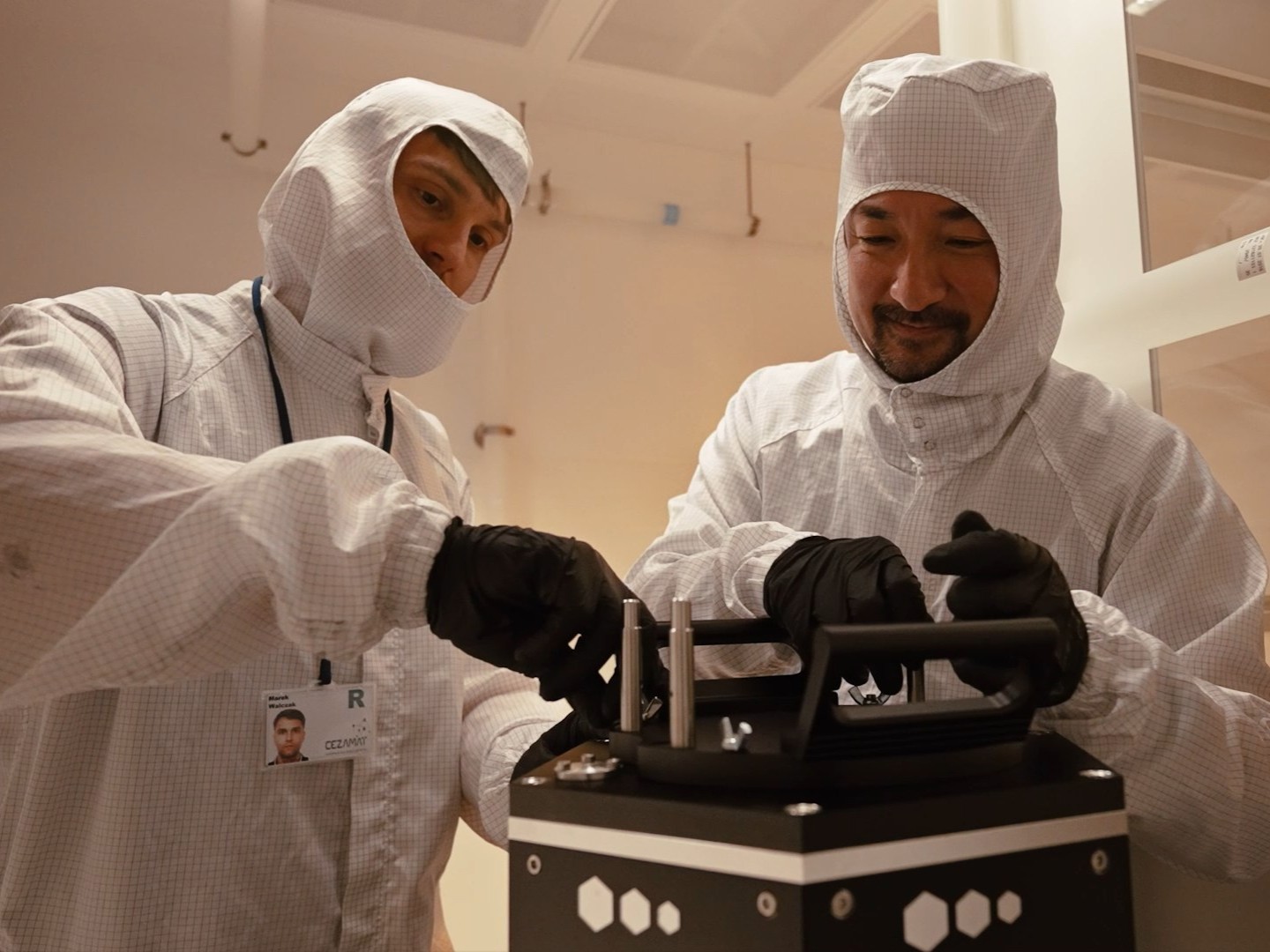
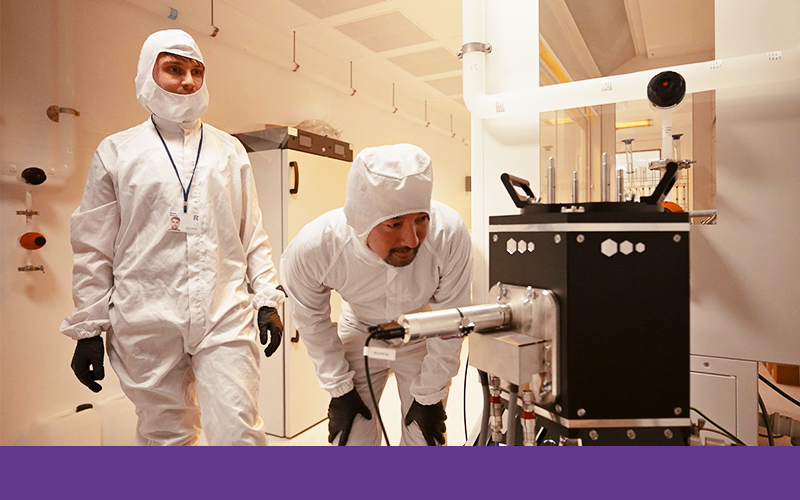
Two researchers in white cleanroom suits and black gloves work together to assemble or adjust a black scientific instrument inside a cleanroom.

Precision work in the cleanroom: preparing detector hardware for ultra-sensitive experiments

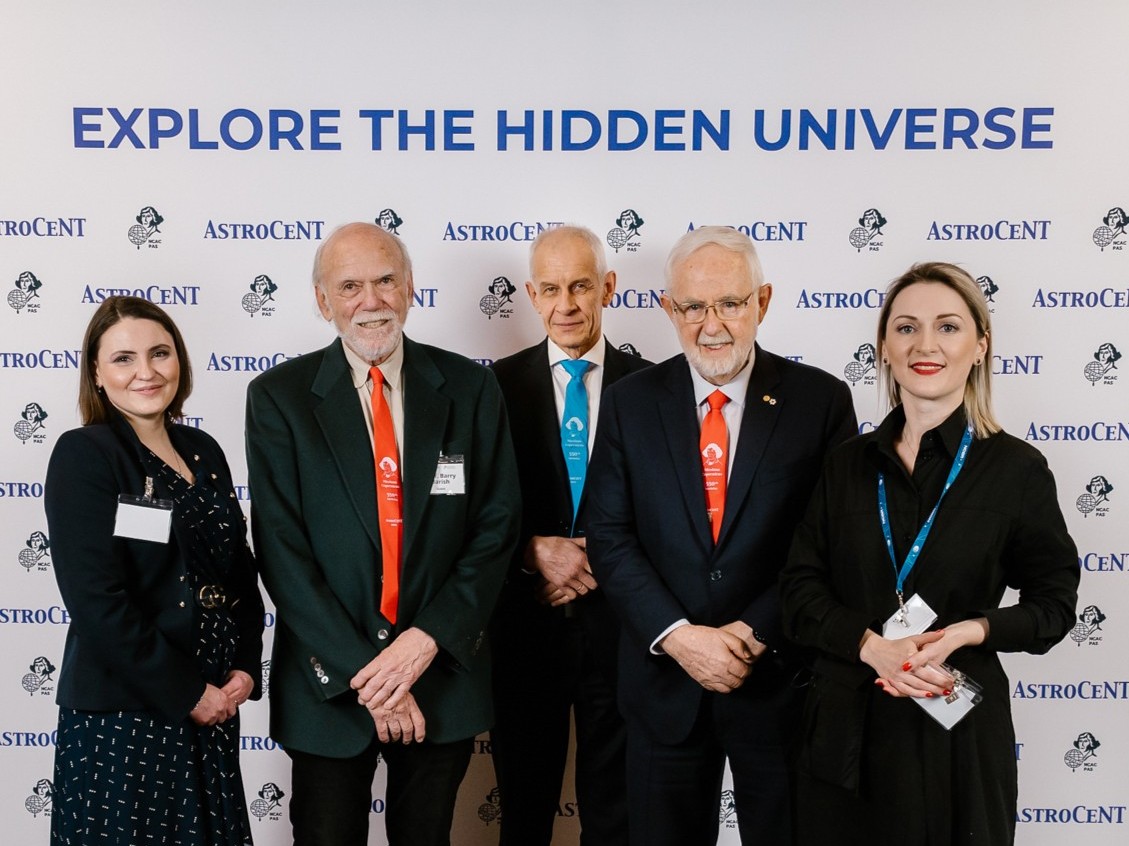
Five people pose for a photo in front of an AstroCeNT-branded backdrop with the slogan “EXPLORE THE HIDDEN UNIVERSE,” wearing conference badges and colored lanyards.

Nobel Prize Winners – B. Barish and A. McDonald – public lectures at Astrocent

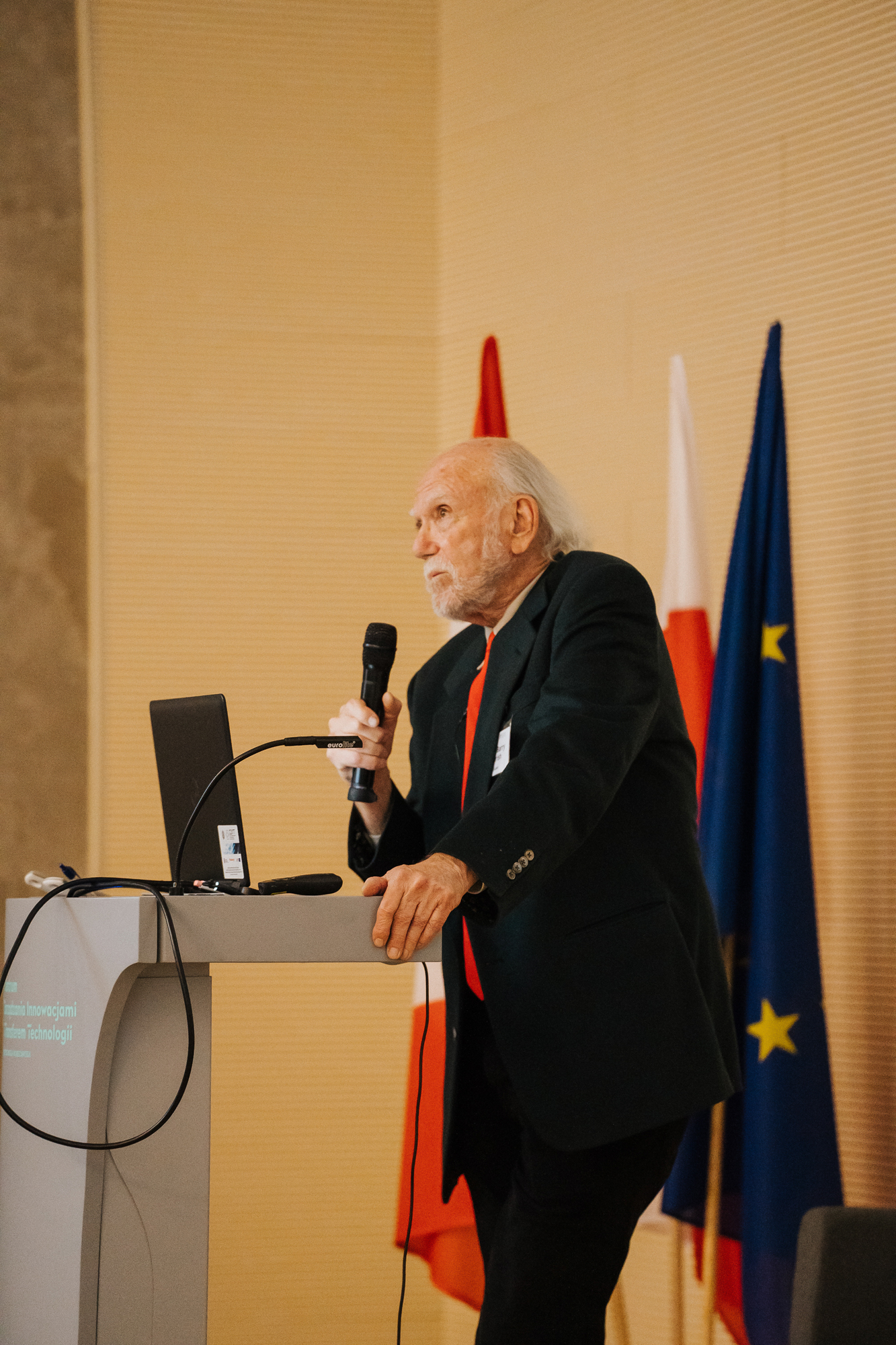
Scientist speaking at a podium during an international physics conference, with a microphone and a conference banner visible in the background.

Prof. Barry Barish during the public lectures at Astrocent

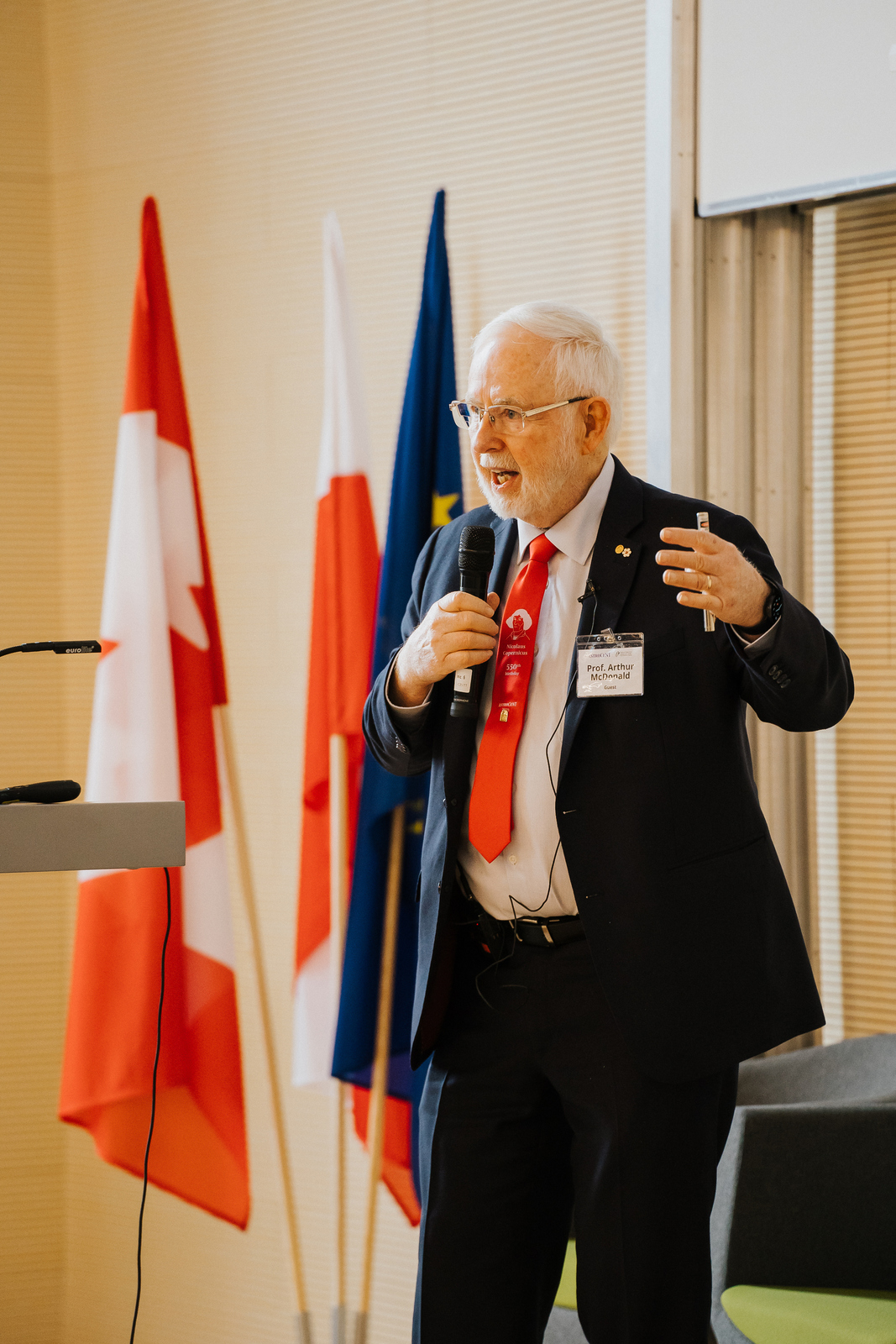
A man in a suit and red tie speaking into a handheld microphone during a formal event, gesturing with one hand, with national and European Union flags visible in the background.

Prof. Art McDonald during the public lectures at Astrocent

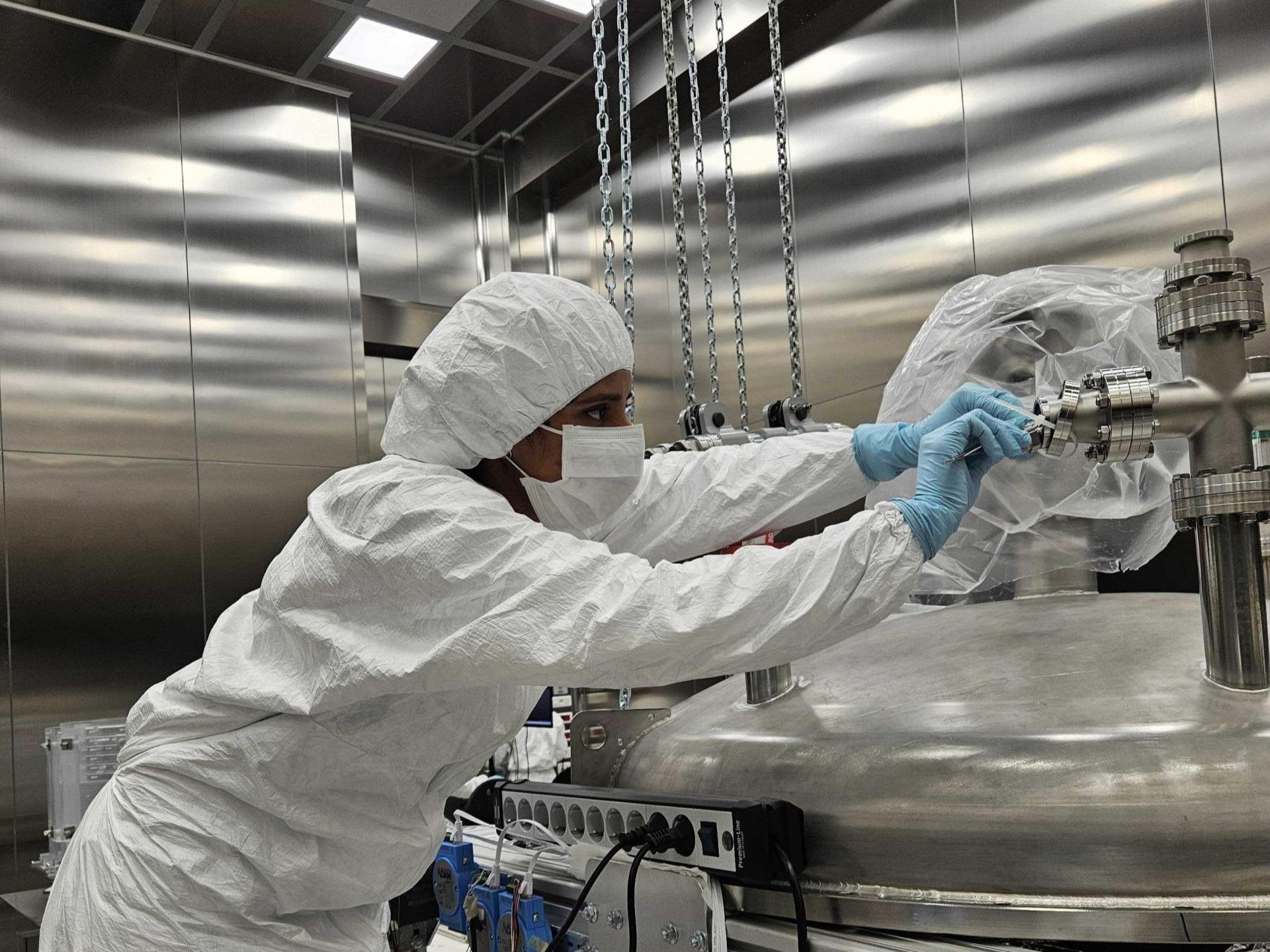
A researcher in cleanroom protective clothing adjusting a large metallic scientific apparatus inside a laboratory environment.

PhD student Clea Sunny working in the LNGS laboratory

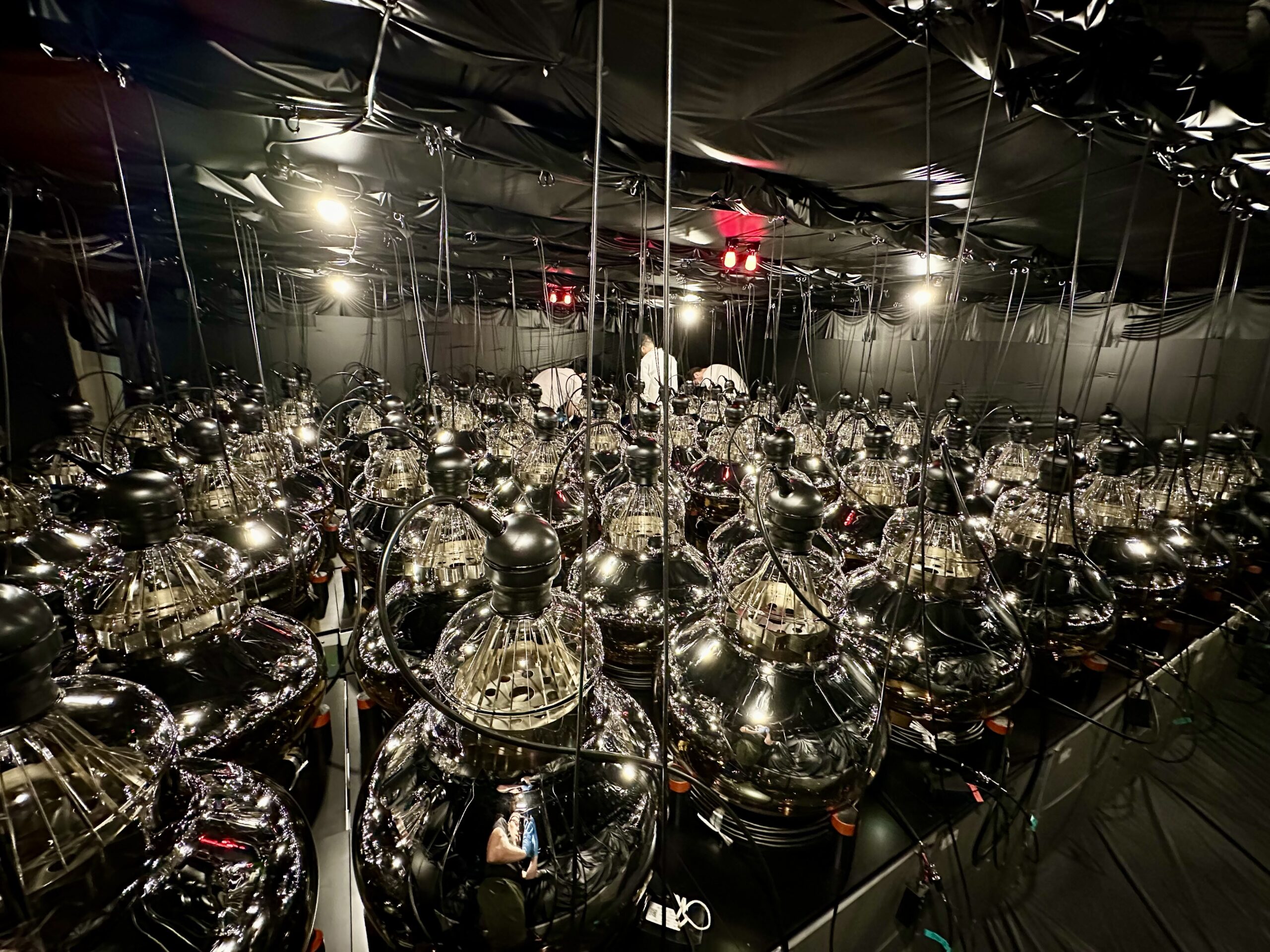
Interior view of a large underground neutrino detector filled with suspended photomultiplier tubes used to detect rare particle interactions.

Equipment for the future neutrino detector Hyper-Kamiokande

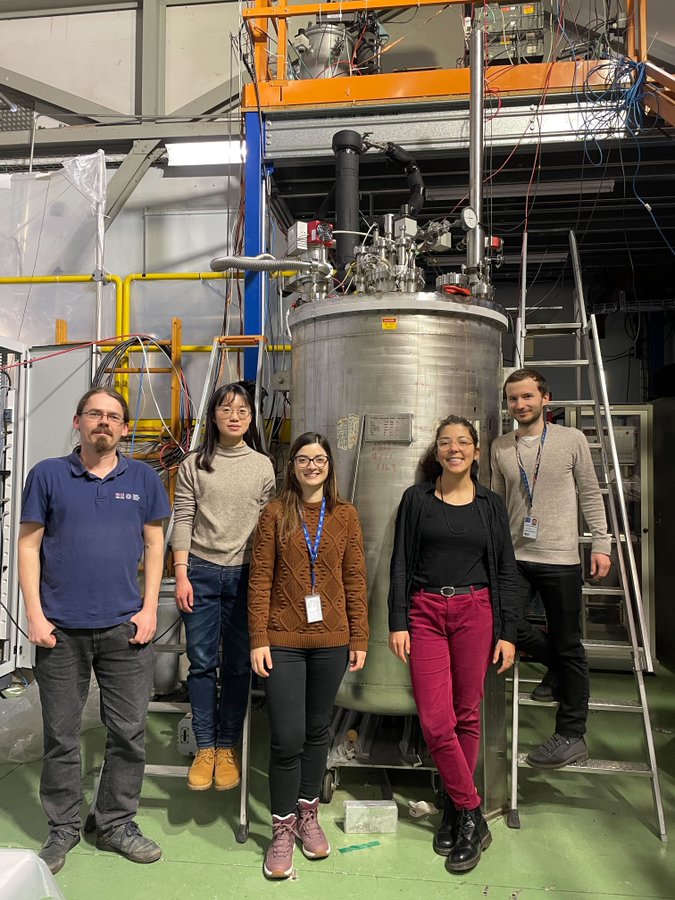
Five researchers standing in front of an AstroCeNT backdrop with the text “Explore the Hidden Universe” during a formal scientific event.

Marcin Kuźniak with the team working on the measurement campaign at CERN

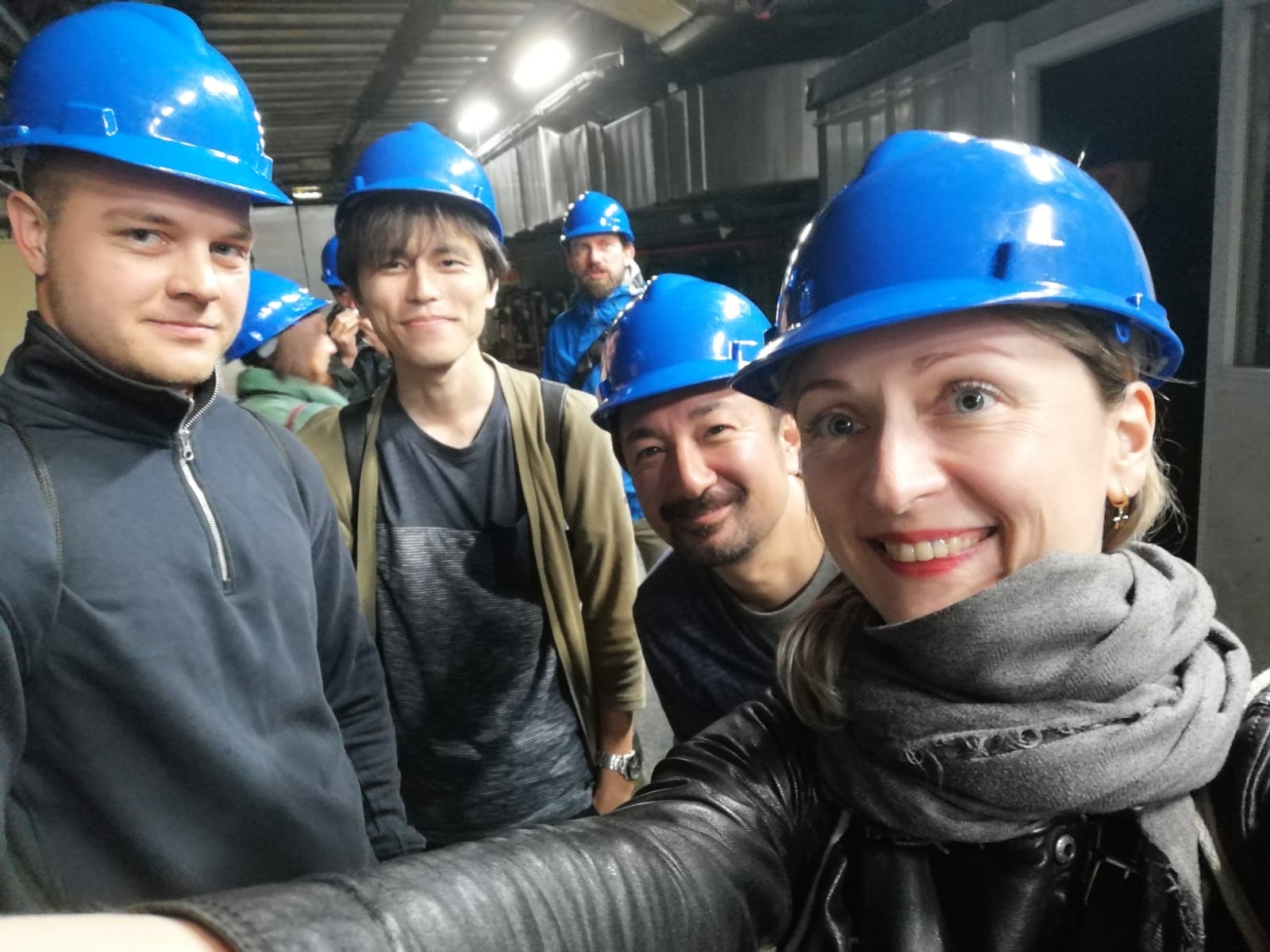
Group selfie of several people wearing blue hard hats inside an industrial underground facility or tunnel corridor.

Astrocent members visiting LNGS underground laboratory in Assergi, Italy

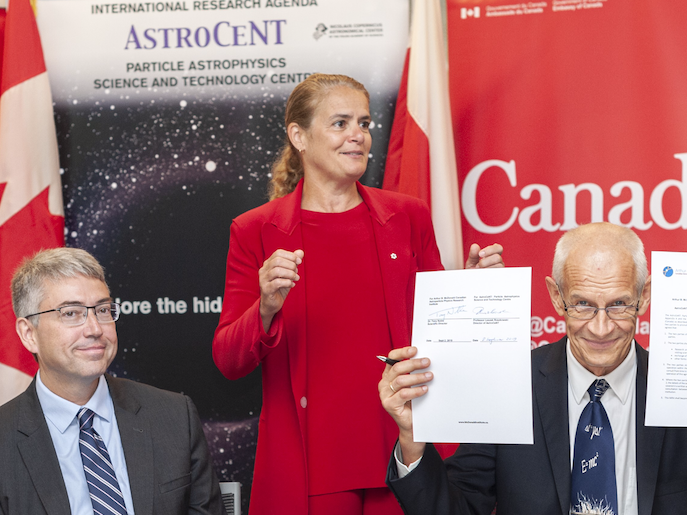
At a formal event, a man in a suit holds up two signed documents while a woman in a red suit stands behind him; an “AstroCeNT” banner and a large “Canada” backdrop are visible.

Governor General of Canada Julie Payette visiting Astrocent

1 / 15

Global Team and Breakthrough Technologies

Our research is driven by an international team of scientists and engineers, including experienced researchers, postdoctoral fellows, PhD students and highly-skilled technicians.

Our shared mission is not only to explore the mysteries of the hidden Universe, but also to deliver innovations that may help improve everyday life. Some of the tools we develop for fundamental research have clear applications beyond the laboratory.

These technologies can help build more precise PET scanners for cancer diagnostics, more efficient solar cells, better environmental monitoring systems and safer critical infrastructure. By bridging fundamental science with practical solutions, we contribute to both global research and societal progress.
Global Team
Astrocent researchers in the cleanroom

Community Updates & Forthcoming Events

Get in touch with us

Your inquiry will be directed to the right recipient, and your data will only be used to provide a response.